The Best Handgun Ammo for Self-Defense, Stopping Power, and Range Performance
The first metallic handgun cartridges emerged in the mid-19th century, yet modern defensive loads still rely on the same core principle: a primer ignites powder, propelling a bullet through the barrel at velocities exceeding 1,000 feet per second. Selecting the right round means balancing expansion, penetration, and recoil, with jacketed hollow points offering controlled tissue disruption while full metal jackets ensure reliable feeding for practice. For effective use, you must match the cartridge’s ballistic profile to your firearm’s barrel length and twist rate, as even a quality load underperforms if it fails to stabilize in flight.
What Actually Matters When Selecting Rounds for Your Sidearm
Selecting rounds for your sidearm hinges on stopping power versus controllability, not hype. The bullet’s penetration depth dictates whether it reaches vital organs through barriers or clothing; bullet weight and velocity together determine felt recoil, directly impacting your follow-up shot speed. Expansion reliability at typical self-defense velocities is the single most critical factor, as a round that fails to open creates a narrow wound channel regardless of its energy figures. Also, feed reliability in your specific pistol model trumps all ballistic charts—a finicky load is useless. Choose a jacketed hollow point from a major manufacturer that cycles flawlessly, penetrates 12–18 inches in gel, and allows you to keep tight groups under rapid fire. Terminal performance matters only after your gun runs without a hitch.
Stopping Power vs. Over-Penetration: Finding the Right Balance for Self-Defense
The core dilemma in defensive handgun ammo is balancing tactical penetration against the risk of hitting .338 Lapua Ammo for Sale bystanders. A round that lacks stopping power forces multiple follow-up shots, while one that over-penetrates can exit a threat and travel through walls. Modern jacketed hollow points are engineered to expand reliably, dumping energy into the target’s torso. However, barrier tests show that heavy clothing or drywall can clog the hollow cavity, turning a defensive round into a barrier-piercing projectile. The practical sweet spot for most civilians is a bonded JHP that penetrates 12–18 inches in ballistic gel—enough to reach vital organs without exiting the body. This balance gives you effective stops while minimizing collateral risk in crowded environments.
Q: What is the biggest mistake shooters make with stopping power vs. over-penetration?
A: Chasing overly penetrative loads like full metal jacket, assuming deeper equals better. FMJ will zip through a threat and likely through a wall; a quality JHP gives you the controlled expansion needed for a defensive scenario.
How Bullet Weight (Grain) Changes Recoil and Point of Impact
Heavier grains like 147gr in 9mm feel slower and pushier because they generate more momentum, so the slide cycles with a softer, thump-like recoil. Lighter 115gr loads snap quicker, with a sharper impulse that often makes the muzzle flip more vertically. That mechanical difference shifts your point of impact for handgun ammo because heavier bullets spend more time in the barrel, letting the muzzle rise before exit—so you’ll group higher at typical distances. Lighter rounds exit before that rise fully develops, printing lower. You can’t just swap weights without re-zeroing your sights, especially at 15+ yards.
Heavier grain = slower, pushier recoil and higher impact; lighter grain = snappier kick and lower impact—always verify your zero when changing bullet weight.
Full Metal Jacket vs. Hollow Point: When to Use Each Type
Choosing between full metal jacket (FMJ) and hollow point (HP) rounds hinges entirely on your intended use. FMJ’s hardened lead core and copper jacket resist deformation, ensuring reliable feeding and deep penetration through barriers, making it the optimal choice for range training and tactical drills where cost and malfunction-avoidance matter. Conversely, hollow points expand upon impact, transferring energy efficiently and reducing over-penetration risk, which is critical for self-defense in populated areas. For carry, select HP for stopping power; for practice, FMJ preserves your barrel and budget while mimicking the same recoil profile.
- FMJ penetrates deeper but creates smaller wound channels; ideal for force-on-force or competition.
- Hollow points can fail to expand through heavy clothing or at low velocities, so verify reliability in your barrel.
- Use FMJ for malfunction drills and magazine testing; reserve HP for final load-out.
- Match bullet weight between FMJ and HP to keep point of impact consistent.
Understanding Calibers: Which Cartridge Fits Your Shooting Needs

Understanding calibers for handgun ammo begins with matching cartridge performance to your specific task, not hype. For concealed carry, cartridge choice balances penetration, expansion, and recoil control—9mm Luger offers a proven blend of capacity and shootability, while .380 ACP suits micro pistols despite reduced power. For home defense, heavier calibers like .45 ACP deliver larger wound channels but demand more grip strength for fast follow-up shots. Practice ammo should mirror your defensive load’s point of impact, so test several bullet weights—124-grain vs 147-grain in 9mm—to see which cycles reliably in your firearm.
The best caliber is the one you can place accurately under stress, not the highest muzzle energy on paper.
Revolver users face a simpler matrix: .38 Special for manageable recoil, .357 Magnum for velocity, but only if the frame handles sustained magnum use. Always verify your barrel’s twist rate and chamber specs before committing to a cartridge, as suboptimal pairing causes keyholing or feed failures.
9mm, .45 ACP, or .380? Breaking Down the Most Popular Choices
When choosing between 9mm, .45 ACP, or .380, your decision hinges on the trade-off between controllable stopping power versus concealability. The 9mm offers a high-capacity magazine, moderate recoil, and excellent ballistic performance, making it the most versatile duty and defense round. The .45 ACP delivers a larger, heavier projectile with superior terminal energy, but its sharp recoil and lower capacity require more grip strength and practice to shoot accurately. The .380 sits at the opposite end, offering minimal recoil and a compact frame ideal for pocket carry. Follow this logical decision path:
- Prioritize capacity and follow-up shots? Select 9mm.
- Prioritize https://specialtysportsandsupplyltd.com/ raw wound channel and are willing to train around harsh recoil? Select .45 ACP.
- Prioritize .35 Remington Ammo for Sale maximum concealment and shooter comfort with limited hand strength? Select .380.
Matching the Cartridge to Your Pistol’s Barrel Length for Accuracy
Barrel length dictates how much time the expanding gases act on the bullet, so matching cartridge pressure to that dwell time is critical for accuracy. A short-barreled pistol (under 4 inches) will struggle to burn slow-burning powders completely, producing velocity loss and a larger muzzle flash; choose a cartridge loaded with fast-burning propellants to stabilize pressure early. Conversely, a 5-inch competition barrel can exploit slower powders for .32 ACP Ammo for Sale a smoother push, but only if the cartridge’s overall length feeds reliably. Optimal accuracy emerges when the bullet’s muzzle velocity exits just as the pressure curve peaks, not before or after. For a practical sequence: (1) measure your barrel’s exact length, (2) test three cartridges with differing burn rates, (3) fire five-shot groups at 15 yards to compare vertical stringing, (4) select the load with tightest vertical dispersion. Even a 0.5-inch barrel difference can shift your point of impact by two inches at 25 yards, so never assume a “standard” load matches your specific slide.

Why Recoil Energy Differs Between Similar-Sized Rounds

Two cartridges can appear nearly identical in size yet produce vastly different recoil because felt push is dictated by the pressure curve and bullet momentum, not just case length. A lighter bullet driven by fast-burning powder spikes pressure early, slamming the slide rearward quicker, while a heavier bullet with slower powder builds pressure more gradually, stretching the impulse over a longer dwell time. Even with matching muzzle energy, the rate of energy 6.5x57mm Mauser Ammo for Sale transfer changes how the wrist perceives kick. Bore axis height further amplifies muzzle flip, so a low-profile pistol makes a hot load feel flatter than the same round fired from a high-slide design. Finally, case capacity and seating depth alter powder burn efficiency, meaning the same grain weight can produce distinct velocity and resultant recoil between two similarly sized rounds.
How to Read a Box of Cartridges: Decoding Velocity and Pressure Ratings
For handgun ammo, the box’s velocity figure—often listed in feet per second (fps) from a test barrel—is your first practical benchmark. A longer test barrel inflates numbers, so compare velocities only from the same barrel length if you’re choosing defensive loads. Pressure is printed as PSI or CUP; higher pressure often boosts velocity, but for handguns, exceeding SAAMI specs risks case-head failures, especially in older revolvers. Always cross-check that a +P or +P+ load is approved for 6.5×55 Swedish Ammo for Sale your specific firearm’s chamber. Velocity shifts dramatically with bullet weight, so a 115-grain 9mm may be 200 fps faster than a 147-grain, yet the heavier slug penetrates deeper. Pressure signs on spent brass—flattened primers or ejector marks—are your real-world confirmation that rated numbers are translating safely. Bear in mind that a box’s advertised muzzle velocity is often optimistic, since real-world cylinders and barrels are shorter than test fixtures. Choose handgun loads where the pressure stays within your gun’s design envelope, not just the fastest number on the shelf.
Muzzle Velocity and What It Means for Flat Trajectory Downrange

Muzzle velocity dictates how quickly a bullet departs the barrel, and higher velocity directly flattens your handgun’s trajectory downrange. A fast round, like a 9mm at 1,200 fps, experiences less gravitational drop over 25–50 yards than a slower .45 ACP at 850 fps, meaning you hold closer to your point of aim without compensating for arc. This flat trajectory matters most for defensive shots at varying distances—a 10-yard sight picture still lands within a fist-sized group at 25 yards. Conversely, subsonic loads drop noticeably past 15 yards, forcing you to raise the front sight. Prioritize velocity when choosing ammo for longer-range practice or outdoor carry, but verify the box’s stated fps applies to your barrel length, since shorter barrels reduce it.
Muzzle velocity is the primary driver of flat trajectory: the faster the bullet, the less drop downrange, so compare fps numbers to minimize holdover from 10 to 50 yards.
Understanding +P and +P+ Loads—When Extra Pressure Is Worth It
When you see **+P and +P+ loads**, you’re looking at factory ammunition pushed beyond standard pressure, with +P adding roughly 10% and +P+ stepping even higher. 6.5x57R Ammo for Sale This extra pressure pays off by driving lighter bullets faster, improving expansion, and flattening trajectories at defensive distances. However, that velocity boost is only worth it if your handgun is explicitly rated for it—check the barrel and manual first, as prolonged use accelerates wear on locks and springs. In compact pistols, snappier recoil can cost you follow-up shot speed, so reserve +P for penetration-critical barriers, not casual practice. Stick to standard loads for training and save the hot stuff for carry.
| Aspect | Standard | +P | +P+ |
|---|---|---|---|
| Pressure increase | Baseline | ~10% higher | Highest (varies) |
| Best use | Practice, range | Defensive carry | Deep-barrier penetration |
| Wear risk | Minimal | Moderate | High |
How Manufacturer Test Barrel Lengths Skew the Numbers You See
Box velocity figures come from test barrels, not your actual handgun. Manufacturers often use longer barrels—frequently 4 to 6 inches for pistols—to wring out max speed, because longer bores allow .32 Win Special Ammo for Sale more powder burn time. That glowing 1,200 fps number on the box likely drops 50–150 fps from a 3-inch concealed carry barrel. Compare like-for-like: a 9mm tested from a 5-inch barrel will underperform in a 3.1-inch Glock 43. Always cross-reference muzzle velocity with your specific barrel length before trusting the box. Pressure ratings, meanwhile, are measured at the chamber, so they stay accurate regardless of barrel—but the advertised speed remains a best-case, lab-condition figure that flatters shorter-barrel shooters with inflated expectations.
Practical Tips for Buying, Storing, and Rotating Your Supply
When buying handgun ammo, focus on lot numbers—grab boxes with matching numbers for consistent performance at the range. For storage, keep rounds in a cool, dry place away from temperature swings, ideally in sealed ammo cans with desiccant packs; avoid loose stacking in drawers that invites dings on the casings. Rotating your supply is key: use older stock first at training sessions, then replace it with fresh purchases so nothing sits for years. Write the purchase month on boxes with a sharpie to track age, and shoot through your oldest defensive loads every six months or so to verify they still cycle reliably. For bulk buys, store them upright and never mix corroded or dented cartridges into your active stash—pull those aside for disposal or practice. Buying smart means grabbing a few extra boxes monthly rather than one giant order, keeping your rotation fluid and your budget steady.
How to Inspect Brass, Primer, and Seating Before You Load a Magazine
Before seating rounds into a magazine, run a fast, tactile inspection. Check the brass for splits, dents, or a corroded green patina around the case mouth, since these weaken the seal. Roll the cartridge between your fingers to confirm the primer sits flush, not proud—a high primer can cause slam fires or misfires. Look at the seating depth by holding the round next to a factory sample; the bullet’s ogive should not bulge the case wall. Inspect brass, primer, and seating as one flowing motion: spin, feel, and compare. If the bullet wobbles or the primer feels soft, set it aside for pulling. Never force a tight cartridge into the magazine, as that indicates excessive case length or a bad crimp.
Proper Storage Conditions That Prevent Corrosion and Misfires
Keep your handgun ammo happy by stashing it in a cool, dry place—think 55–70°F with humidity under 40%. A sealed ammo can with a silica gel desiccant pack beats a loose drawer every time, because moisture is the real villain behind corroded brass and seized primers. Even a temperature-swing-prone garage shelf can condense moisture onto cartridge cases, so check your storage spot’s microclimate, not just the thermostat. Avoid direct sunlight and always keep rounds in their original trays or a snug container; rattling bullets can crack sealant. Proper storage conditions that prevent corrosion and misfires also mean rotating your stash—use old stock first so nothing sits for a decade. Inspect monthly for green spots or dull primers.
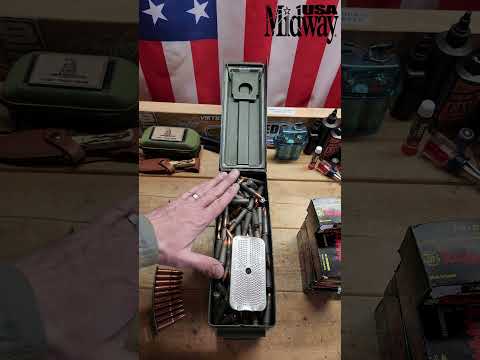
Keep ammo cool, dry, and sealed with desiccants; rotate old rounds 6.8 SPC Ammo for Sale first to dodge corrosion-driven misfires.
How Long Can You Keep Spare Rounds Before They Lose Reliability?
Spare handgun rounds don’t have a hard expiration date, but their reliability window hinges on storage conditions far more than calendar time. Factory ammo kept cool, dry, and away from temperature swings can remain dependable for a decade or more, yet moisture or ozone exposure can degrade primers and powder within a couple of years. The real risk isn’t aging—it’s hidden corrosion or propellant breakdown that manifests as misfires or weak ejection. Rotate your stock every six to twelve months, and always pressure-test older spare rounds at the range before trusting them for self-defense. If a round fails, discard the entire lot, not just the culprit, since batch consistency matters for reliability.
Common Shooting Problems That Trace Back to Your Choice of Load
You’re at the range, squeezing off rounds, but your groups look like a shotgun pattern. Before you blame your grip, Ammunition for Sale look at the box of handgun ammo in your bag. A light-for-caliber load might cycle the slide sluggishly, causing stovepipes and failure-to-feed jams that kill your rhythm. Conversely, a hot, over-pressured round snaps the muzzle up violently, making your second shot land high and right. Even bullet profile matters—flat-nosed rounds can snag on feed ramps, while hollow points might not expand at low velocities. The real culprit behind fliers and keyholing is often the wrong bullet weight for your barrel’s twist rate. When you switch to a load your gun actually likes—properly seated, consistent powder charge—the malfunctions vanish and your accuracy returns. Common shooting problems that trace back to your choice of load are solved by testing a few brands to find the right handgun ammo your pistol digest cleanly.
Why Your Pistol Jams More With Certain Bullet Shapes
Bullet shape dictates how reliably your pistol feeds, and the culprit is often the nose profile. Flat-nosed and hollow-point ammunition can snag on the feed ramp’s edge, especially in guns with steep, unsupported angles, causing the slide to short-stroke or the round to nose-dive into the chamber mouth. Round-nose full metal jackets, by contrast, glide over that same ramp with a cam-like action, so they’re notoriously forgiving. *A truncated cone might look tactical, but its sharp shoulder can catch on the extractor or the barrel hood if your magazines are slightly worn.* The real fix isn’t polishing the gun—it’s matching your bullet’s ogive to your pistol’s feed geometry, then testing with snap caps before you trust it for defensive use.
Signs of Underpowered Rounds: Failure to Cycle the Slide
When a handgun’s slide fails to cycle fully after firing, the most direct cause is often underpowered rounds failing to generate sufficient recoil energy to overcome the recoil spring’s resistance. This manifests as a short-stroke, where the slide moves rearward but does not strip the next cartridge from the magazine, or an incomplete return, leaving the action out of battery. Light-loaded ammunition, particularly with reduced powder charges or low-pressure bullets, produces lower slide velocity at the ejection port. Consequently, the spent casing may fail to clear the ejector, causing a stovepipe jam. Conversely, a slide that chambers the next round but lacks force to lock the hammer or striker can indicate marginal energy, just at the threshold of cycling reliability.
Accuracy Issues Caused by Mismatched Bullet Weight and Twist Rate
When your handgun’s barrel twist rate doesn’t match your bullet weight, accuracy falls apart at practical distances. A slow twist—common in factory barrels—won’t stabilize heavy, long projectiles, so they yaw in flight, producing keyholing and erratic vertical stringing. Conversely, a fast twist over-spins light bullets, amplifying centrifugal stress and causing them to veer off-axis as velocity decays. You’ll see tight groups with one load, then shotgun-like patterns after switching weights. Check your twist rate (often 1:10 to 1:16 in pistols) and match it to bullet length, not just grain count. Test different weights to find the sweet spot—if groups tighten, the twist-load pairing is your culprit.
 English